

Your kitchen gardens
Spoiler alert: chickens!

My review of The Kitchen Garden kicked up a lot of hay from the Brunette Gardens community. “The only time my kitchen garden is photogenic is in early June, before I start harvesting lettuce,” said Claire Schosser. “It's downright ugly by autumn.” Cedar Sanderson wrote, “Now I kind of want a book from you about an actual garden history, showcasing fowl, weeds, compost, and all the perils and pitfalls of gardening without staff.”
Little did Sanderson know I’d already planned to put that back on you, with a call in last Tuesday’s chat for examples of your own.
The result was a cornucopia of cozy kitchen gardens, with nary a castle among them. Unless of course you believe that every home is a castle.
Notably present was this photo of actual, real-life, egg-producing layer hens, and unlike the sole image representing fowl in Musgrave’s book, they’re in sharp focus!
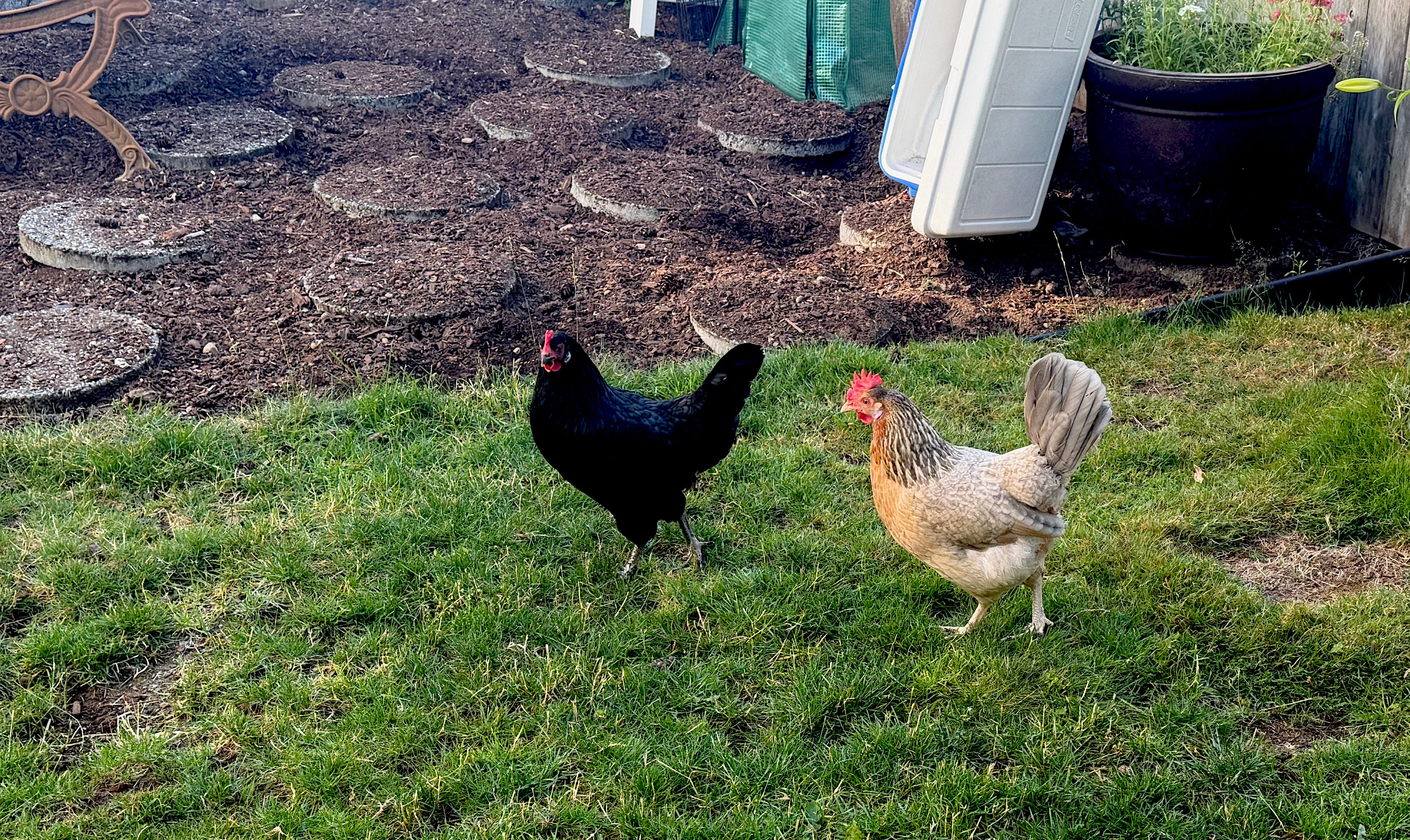
That came from Eric, who by the way also writes the Substack Security n Cigars. Here’s a description of his kitchen garden:
We live in Western Washington, in zone 8b. We do get temps as low as 15F in the winter, and summer temps are generally 70F but can get in the 80’s occasionally. Some summers we see almost no sun; others, we have a pleasant, warm summer. We have backyard chickens as well as raised bed and horse trough planters. My wife usually plants sweet peas, tomatoes, tomatillos, a bunch of herbs (lavender, oregano, thyme, rosemary), radishes, garlic plus various flowers that help with pest control. And we have two grape vines that actually will produce grapes, but are decorative.
The metal horse-trough planters were of particular interest to me, as I’m in the middle of an experiment with raised beds for the first time. Reader Paul Smith—who incidentally also won a free copy of The Kitchen Garden in the publisher’s giveaway—showcased these same metal troughs in his submission. I love the look of them, spilling over with blooms, the mountains in the background and greenhouse there to the left. It’s a great pic!
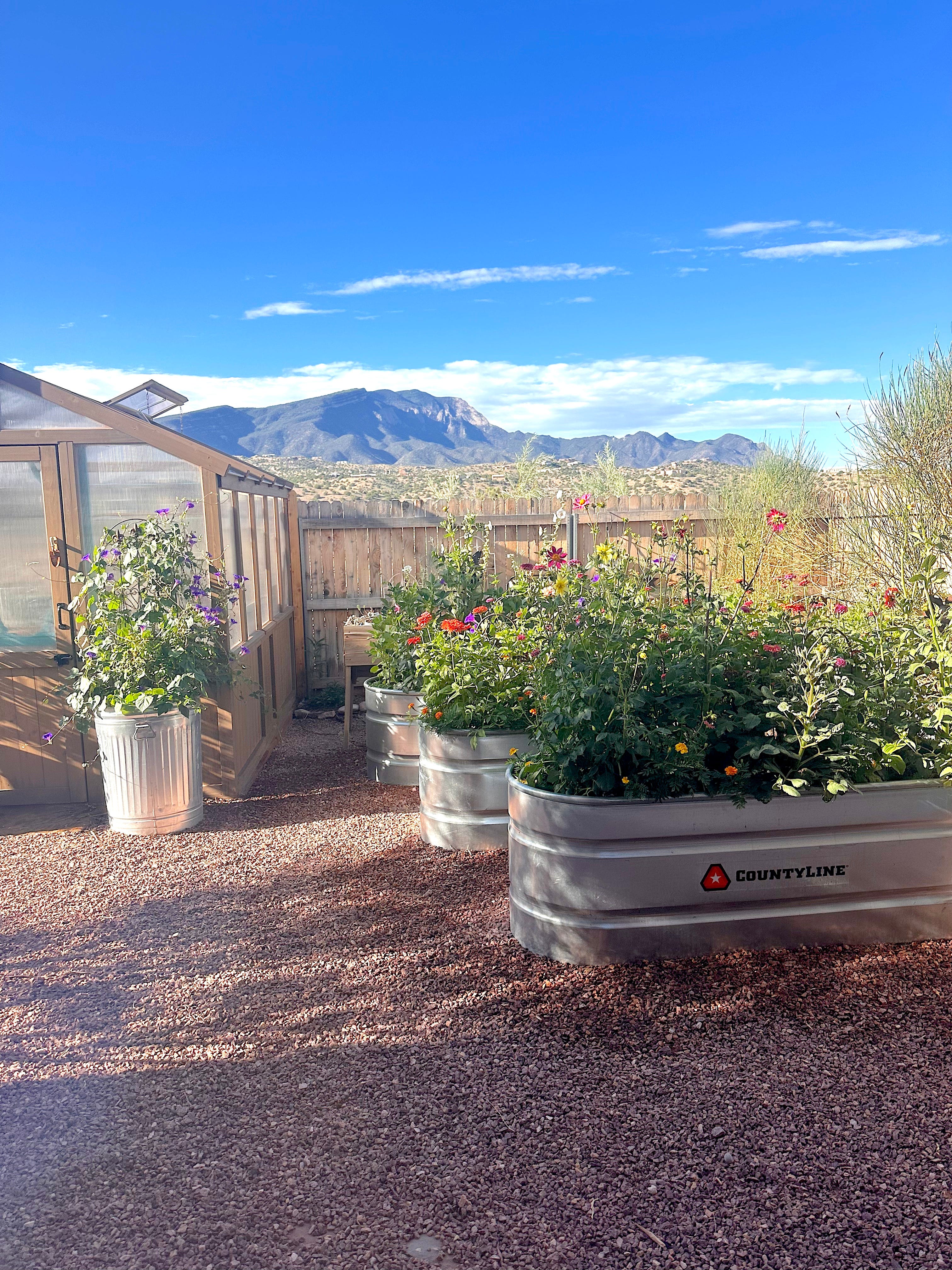
About Paul’s kitchen garden:
I live near Albuquerque, NM, in zone 7b. I use raised beds to grow flowers and veggies, and horse-watering tanks help keep the pests out.
I bet there in the desert, those raised beds make a lot of sense, as you can build up your own soil inside the beds to grow vegetables and flowers that might need more than the desert soil is able to provide them.
From another kind of landscape entirely—the rainy UK—came this example of a wild and wonderful food forest.
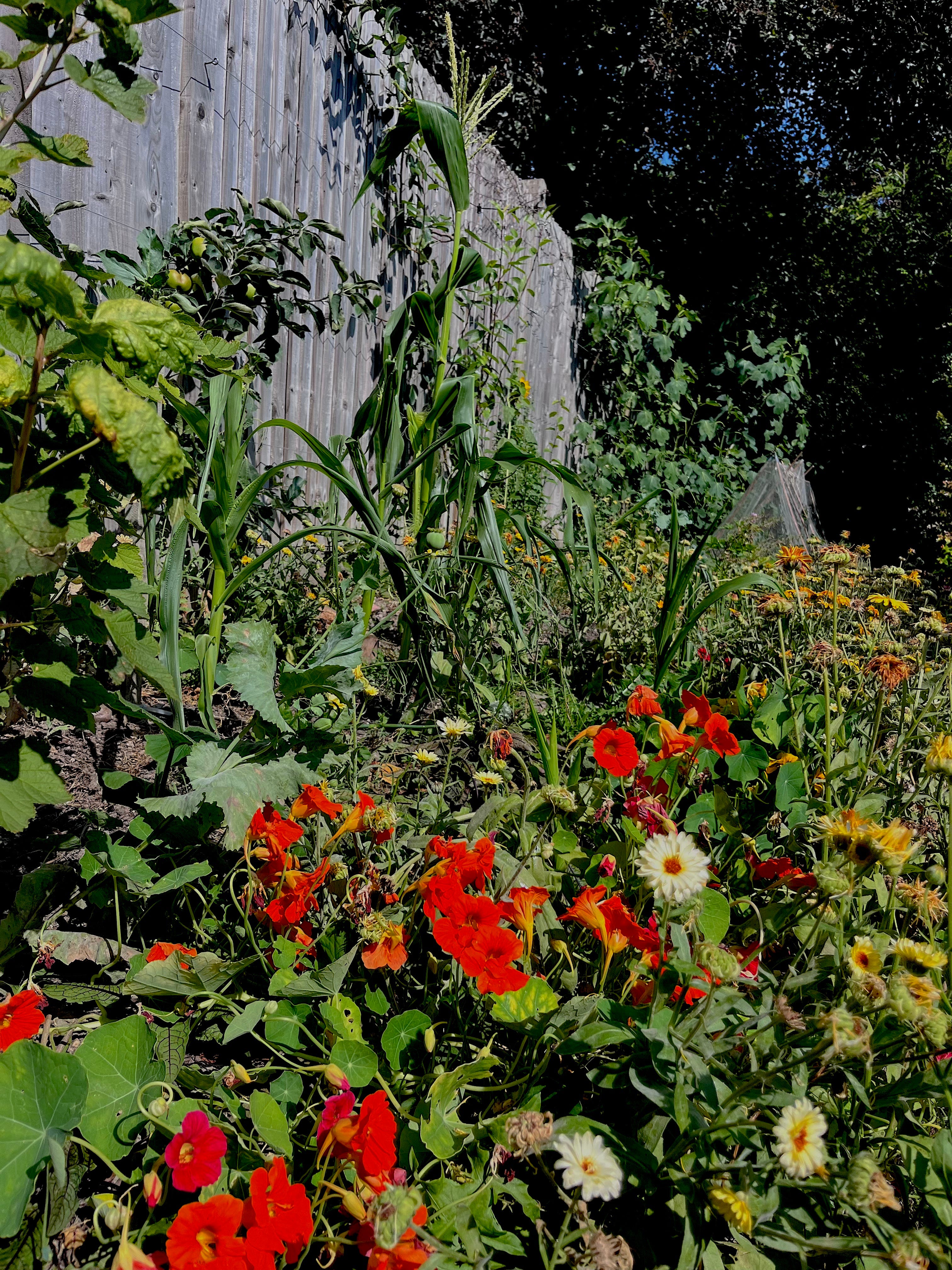
Love this idea! I live at the seaside in East Sussex (about an hour’s drive from Robertsbridge, actually), and this is my food-forest garden. I am still establishing a food forest, where all the different layers support one another, but I have already noticed an improvement with the slug issue we have around here!
— From another Substack writer over at Zuza’s Family Kitchen.
For more examples, see the chat. Each contributor received a six-month paid membership to Brunette Gardens. Thanks to all of them for their shares, and I hope you’ll check out the writers’ newsletters, too.
An honorable mention goes to reader Notsothoreau, whose text-only entry struck me as possessing the quality of a tone poem:
I used those 2x4’ aluminum beds and the 2’ rings. Can’t show a picture, as it is an overgrown mess right now. We had rain, and I got sick. I did plant fruit trees and already had berry bushes. I will get some veggies, but not like I’d planned. Rural KS
I’m a big softie for gardeners struggling with illness and rain, and how many of us get other than we planned, right? She wouldn’t share a photo even though I said messes were the point of the exercise, but I gave her a 3-month comp all the same. If you’re curious to know about her berries, she’s planted four kinds, but it’s the marionberries so far that are yielding fruit.
To continue on the raised-bed theme, here’s my own example. The wooden ones are repurposed shipping boxes, free from our agricultural extension office; I scored the green metal one for $5 at a yard sale, and the keyhole planter was a splurge. It’s made out of sheet metal. The shape makes it very easy to work with, so the investment was worth it.


In these, I’ve successfully harvested lettuce, carrots, radishes, and cucumbers, with tomatoes, peppers, okra, zucchini, and squash on the way. The half barrels are full of calendula, which attract pollinators and can also be used to make a nice salve; nearby, in permanent beds near the house and deck, I grow perennial thyme, sage, tarragon, hyssop, mint, and oregano. I gave away our chickens when we moved to a rural area, where I now buy eggs and raw milk directly from a farmer, who’s also taught me to milk her two cows, Belle and Bessie.
Here’s the review that kicked off the kitchen-garden call, in case you missed it.

You might like this book of poetry for its garden themes.
I used to garden in Western WA but had to give it up at the last place. The back yard was surrounded by big trees in the neighbors yards. The front yard had a big maple tree. There just wasn't enough sun. But the sneaky problem is the short growing season. The temperatures are mild enough you'd think that wouldn't be a problem. It takes so long for the ground to warm up that you don't have a lot of time to grow.