


If garden porn were a thing, this book would exemplify it.

I mean, look at that cover, for starters. It’s the kind of book you’d want on your living-room coffee table, especially if your living room were decked out in Brunette Gardens theme colors.
And if garden porn were a thing, which it is, of course, because if it exists, there’s porn for it, The Kitchen Garden’s centerfold would be the entry for Perch Hill.
Aaaaah… Perch Hill, in Robertsbridge, East Sussex, England. It’s the home and business of Sarah Raven, author of 14 books. Her website demurely states, “The Sarah Raven brand was first established in 1999 with a humble seed list1,” but when I gaze at photos of that incredible garden set amidst ninety acres, it seems far away from its humble origins. The Kitchen Garden’s author, Toby Musgrave, describes it thusly:
Viewed from above, plantings in the orderly array of beds within the enclosed perennial cutting garden take on a jewel-like appearance on a misty autumnal morning.
Um, “thusly”? Is this how I’m talking now that I’ve finished The Kitchen Garden?
My own garden rarely if ever takes on a jewel-like appearance—not even on a misty autumnal morning.
You see what I mean by garden porn.
But you might as well get a copy of this beautiful book, in my definitely humble opinion as someone who has not written 14 books on gardening but has been stumbling around in gardens all her life. The Kitchen Garden is a wonderful fantasy escape if, like me, you’re turned on by “terracotta pots of flame-coloured tulips” and a “tapestry-like planting […] where edibles and flowers intermingle”—both also to be found at Perch Hill.
Other worthy moments:
An elliptical, walled garden, the only one of its kind, in West Sussex, England
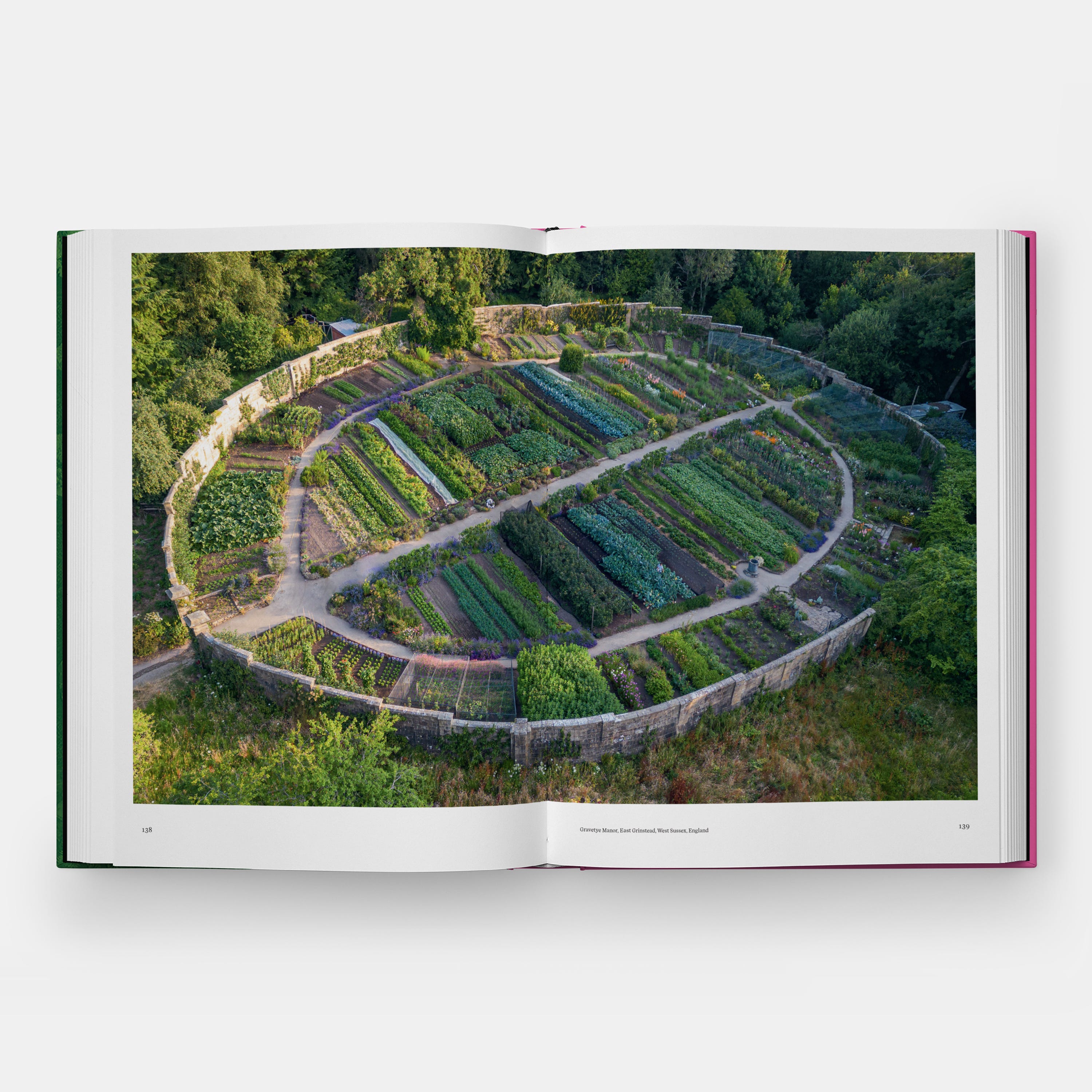
Castle gardens in Scotland, West Sussex again, and of course, Versailles
A manorial
farmhousevilla (“it is really too grand to be called a farmhouse,” says Musgrave) with a lake view on an island in Norway
This book made me yearn for a stone garden wall, that I might train my fruit trees against, in espalier fashion. And who wouldn’t want to live at Sleepy Cat Farm, with its children’s storybook name, picture-perfect Victorian greenhouse, and enigmatic squash arch? It’s a place where, Musgrave promises, “Edibility, formality, and geometry unite” (46).
Rows of perky vegetables interspersed with beckoning blooms, onions lined up in neat storage trays rimmed in white, a pristine pebble path leading you toward a bubbling fountain: A fantasy escape for dreamy gardeners like no other.
But The Kitchen Garden is not just that. It’s also a well-researched history.
Musgrave weaves the kitchen gardens’ back story through a visual-narrative tour of 52 of them chosen for inclusion. “Rural villas of wealthy Romans had kitchen gardens,” he relates in the introduction, and then he asks us to consider the Zuni pueblo gardens and Aztec floating chinampas as examples of the same.
The list of 52 is not quite as diverse as you’d think, however; all but one of the 11 American gardens are in coastal states, and none of the gardens chosen from across the world float or even showcase anything as quirky as, for example, Sepp Holzer’s permaculture terraces2. The UK dominates, with Central and Northern Europe shouldering over to make room for a smattering from New Zealand, Australia, Argentina, two South African gardens, and a single one from Singapore.
I wish Musgrave, whose bio says he’s “an acknowledged authority on garden history,” had used footnotes and citations for those of us who’d like a deeper dive. He does include a short “further reading” section at the end.
“In the United States,” he writes, “the oldest documented community garden was founded in 1759 in Bethabara, North Carolina, and is gardened still” (16). There’s a decided preference for community efforts across the selections, but only when those communities are urban, as in the case of the Brooklyn Navy Yard and Berlin’s Prinzessinnengarten Kollektiv. The former is praised for its “equitable distribution programme,” which hands out produce “at little or no cost” to New Yorkers, who pay on an honor system, “practicing economic solidarity with your community because fresh food should be a right and not a privilege” (53).
Just as there’s porn for everything, even gardens are political.
Or maybe gardens are especially political these days.
I’m not saying gardens should be divorced from politics. I appreciate Musgrave pointing out, for example, that 96 percent of the vegetable cultivars available to Americans 120 years ago have been lost. That’s a sad fact for our food security and our taste buds, too.
But despite the fantasy photo spreads and informed history, The Kitchen Garden filters the story of kitchen gardens through a political lens, and an elite one at that.
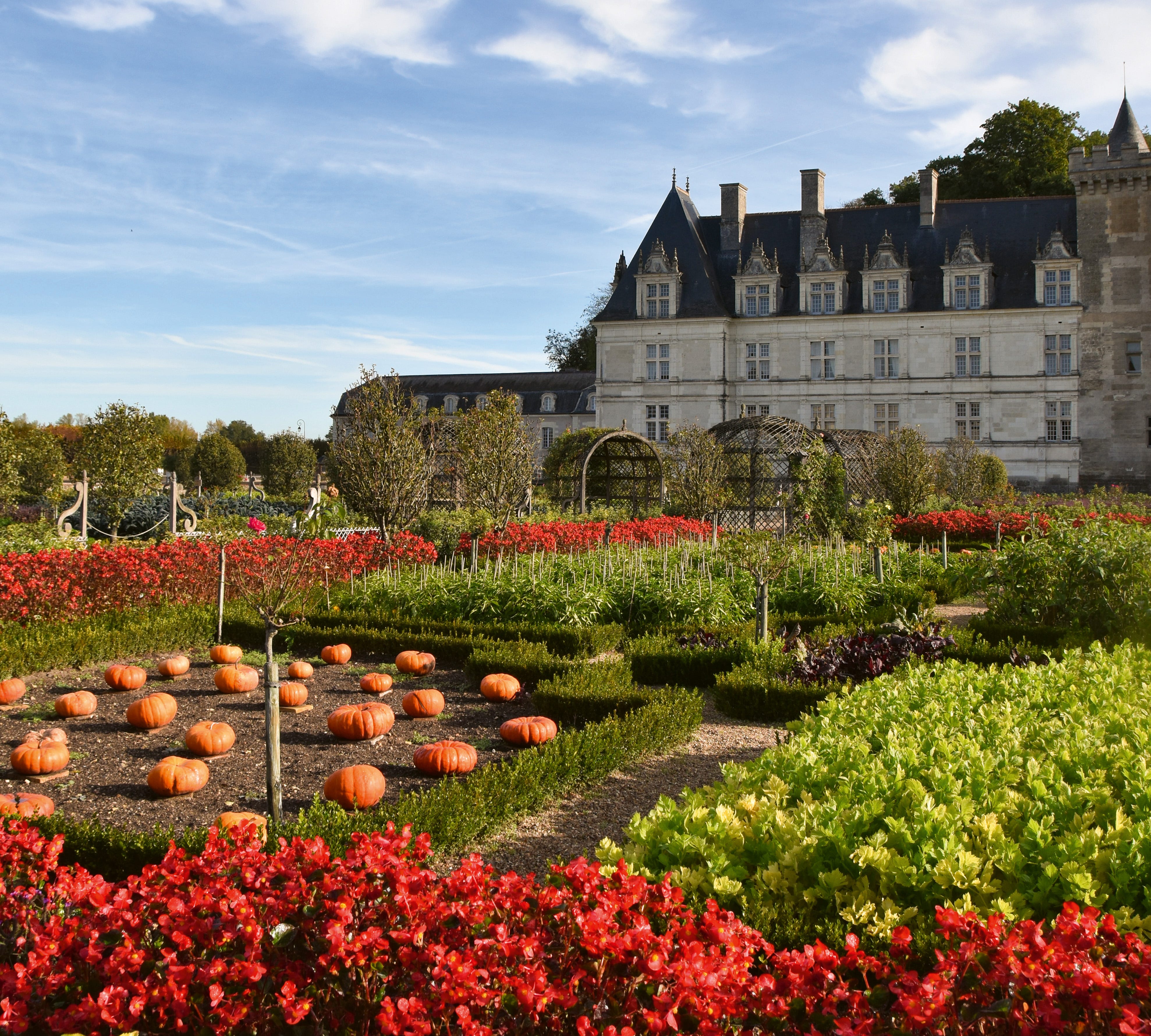
For the section on Monticello, there’s no mention that Thomas Jefferson brought viticulture to the United States, an important detail for kitchen-garden history. The tsk-tsk of “enslaved labour” isn’t contextualized, not that I’m in any way defending the abhorrent practice: Monticello isn’t the only garden among the 52 with that history, though it’s the only one called out. Villandry was owned by a wealthy slave trader3, and there are probably others.
You would expect a book on gardens attached to home kitchens to include some animals, but this one seems to want to hide their role. Musgrave reports that at the Stone Edge Farm in Sonoma, California, “free-range chickens roaming the olive grove (which produces fruit and oil) not only give eggs but also contribute to pest control by consuming the olive fruit-fly larvae that overwinter in the soil” (26). What a great pairing of gardening and husbandry techniques, just the kind I see regularly in the humble homesteaders I know. But there’s no picture of the birds. In the entirety of The Kitchen Garden, there’s only one photo of a chicken—at the Edible Schoolyard in Berkeley. And that one’s blurry, as if to obscure any reference to the omnivorous diet humans have followed since the beginning of time. Likewise, in the section on Bahía Bustamante Lodge in Argentina, there’s a reference to homemade compost made from manure but again no pictures of the chickens, horses, or sheep that provided it.
This all begs the question: Where does the “kitchen garden” end, and homesteading (or smallholding if you’re a Brit) begin?
It seems that homesteading/smallholding is a populist endeavor while kitchen gardens are only for elites with manors or former palace grounds.
Joel Salatin might have the best method for employing chickens in the production of compost, but I’m sure Musgrave didn’t even think to include him in this book. It’s not Salatin’s business that kept him out, either—that Perch Hill owner sells everything from heart-shaped trowels to Scottish socks. It’s probably Salatin’s social status (more working-class) and his politics (contrarian). At a homesteading conference back in 2023, I watched him demo humane, efficient chicken-butchering.
It’s hard to fully champion a tome giving such short shrift to our mutually dependent relationship with domesticated animals when the topic is our 12,000-year history with kitchen gardening. While there’s just the one blurry chicken photo, an entire garden devoted to the vegan lifestyle earned a place. Not even the photo spread of a private garden in Denmark said to include a chicken coop and ducks in its mandala-shaped design shows any of the fowl.
Neither does Musgrave share details about who actually works these gorgeous gardens, what time and resources they put in. Likely sizable staffs, most if not all of them. What was the cost to install each one, and what are the expenses to maintain them? There are many references to garden designers, too, some of them celebrities like Hugo Bugg.
One of the most interesting gardens is Funan Urban Garden. Musgrave refrains from calling it a garden on top of a shopping mall, but that’s what it is. Neither does he explain that the garden is a for-profit enterprise, a company with what seems to be a solid business model. Contrast that with the non-profit Brooklyn Navy Yard and its honor-system, which apparently does work. But that’s not too surprising, as homesteaders have relied on their honor-system farm stands probably since the dawn of agriculture (I shop at one every week). Musgrave seems to think the Brooklyn folks invented the concept.
I probably sound harsh, but I still enjoyed the book. While the gardens presented are out of the reach of 99 percent of readers, you can still derive many useful takeaways from their techniques. For example:
I noted eye-catching combinations of plants that also grow well in my area, such as sunflowers paired with pumpkins or cosmos.
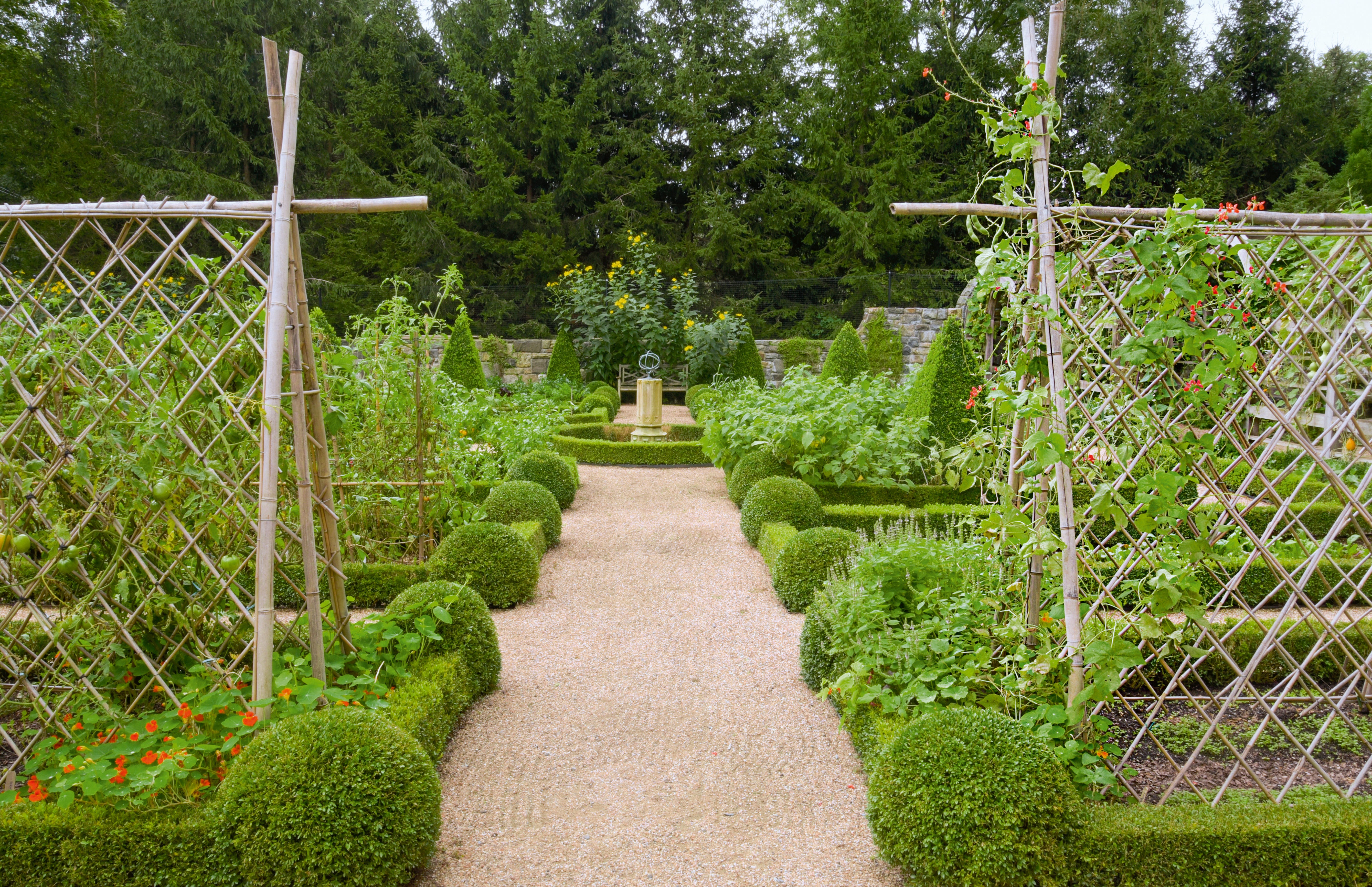
The loveliest gardens make use of varying heights, with vines clambering up structures, and large trees, especially fruit trees, drawing the eye upward.
You might not be able to duplicate Sleepy Cat Farm’s “magnificent” 13 acres, but anyone can use these bamboo pole supports.
I tagged a number of pages specifically for examples of mown-grass paths, an element I’m hoping to design into our new garden.
Why stick to linear rows when gentle curves or even that mandala shape could work just as well, or maybe even better?
Besides these practical pulls, it’s always nice to dream big. Maybe someday I’ll even visit some of the fantasy gardens in this book, though the only one I can get to easily is also the sole garden that features an iconic red barn: the Seed Savers headquarters in Decorah, Iowa.
In coordination with the publisher, Phaidon, I’m giving away a hardcover copy of The Kitchen Garden to one (U.S.-only) subscriber I’ll pull from the list tomorrow at 11 am US CDT. The winner will hear from the Phaidon publicist directly about getting the copy.
Examples at https://www.seppholzer.info/terracing/.
Big gardens can be a lot of work, especially when you add chickens. However, the constant addition of chicken manure has turned our garden into a jungle.
Now I kind of want a book from you about an actual garden history, showcasing fowl, weeds, compost, and all the perils and pitfalls of gardening without staff.