

Once more to a small town
We boomerang back again to where we now belong.

I lived for fifteen years in the moody, mysterious Pacific Northwest, and its vibe still thrums in my bones. I used to sit in my little office pod at Big Fish Games and gaze out at the velvety sheets of soft rain melding into the rippling grey expanse of Puget Sound, the Olympic mountain range obscured by billows of misty clouds, as it is most days. I wore headphones to block out the sounds of caffeine-fueled Nerf-gun battles and listened to this song, my anthem, on repeat.
In my previous post, I announced the reason why in 2025 we left our beloved city farmhouse:
Last May my husband and I finally permanently unplugged from our perennial city moorings and moved to a rural small town.
I also walked you through our s-l-o-w shift from loyal adherents to the urban myth to lovers of rural, small-town living:
This was a very good move for us and the culmination of a long transition out of our urban lifestyles to something better.

As evidence that this transition is a tough one to come to in today’s society—the majority of our pop culture narratives cut against it—I ended the post with the fact that we’d defected to a small town once before. Let me pick up my thread there: Anthony and I officially left Seattle in 2015, and our son, Zander, soon came to live with us full-time in our new home, in a town of less than 10,000.
That little rural burg made its mark on all three of us, and none of us would ever be the same again.
On our first visit to this town, which I’ll call Temperance, I thought it was a shithole.
Excuse my language, but that’s exactly what I called it.
The collapse of the coal industry that once powered it left Temperance reeling from the double blights of poverty and meth.
The rain in the Pacific Northwest, though gentle, is relentless. Constant sky spittle from September clear through June takes its toll, and in Temperance that meant house paint flaking off to reveal rotting wood. Blue tarps stretched in vain across drooping roofs. Rust, so much rust, on old pickup trucks and abandoned farm equipment and broken gates.
But Temperance had two things going for it.
First, unlike in Seattle, we could afford to buy a house there.
Second, the rural countryside offered quiet solace. Each time I returned from the four-hour round-trip trek to Seattle, I’d smile when I got to the sign saying, “Last rest area next 49 miles.”
Because that meant I was free of the city and its onslaught of harsh sights and sounds.
I could inhale… and slowly… exhale.
I’d gaze out at the rolling farmland, the streams and wetlands, the mountains in the distance, all lit by that delicate, low-angle, Northwest light—oyster light, for the play of sun through clouds, bouncing around in shimmering pastels like the inside of a shell.
Something released in me then, something that had been submerged by concrete and asphalt all this time. What was it? A feeling, visceral. Not the abstract environmental conviction you forge as a concerned urbanite who hikes on the weekends but a real, authentic desire for connection with the natural world. Not as a precious thing separated and set off from most people but integrated and in harmony with humanity.
We moved to this small town and not a “better” one because Anthony had a job opportunity there. I could continue my tech job remotely. Zander could take a train from Seattle when we shared custody with his bio mom, but soon he came to live with us full-time.
That’s Zander’s story to tell, but I think my husband and I can now admit that we left that young man too soon. It came as a surprise to all of us, most of all Zander himself, but he still needed us, and he needed us closer than that train trip allowed.
All that said, Temperance was good for us as a family, for what it gave all three of us even if not a permanent home.
Zander received a crash course in just how good he’d had it as a child of three successful parents. While none of us were well off, we did all right, especially in comparison to the average person eking it out in Temperance. Zander’s peers had meth-addicted single moms and absentee fathers or just two parents who worked to the bone at shitty service jobs. While in Seattle, his friends’ parents tended to be office workers and consultants who could afford to pop for spendy gear for crew club or wrestling, his small-town friends came from families who’d never recovered after the coal mine shut down. Zander got perspective.
But more than that, I think he was genuinely happier in Temperance even though he’d had to forfeit his last high-school hurrah to live there. He was blessed with good friends who looped him into small-town experiences like “mudding.” While Seattle meant rap, graffiti crews, and marijuana—recently legalized and everywhere available all at once—his new life encompassed country music, chewing tobacco, county fairs, and lifted trucks. It was an entirely different culture.
He lived with two parents who still insisted on sitting down to dinner as a family. His father and I also learned to let him make his own mistakes and deal with the consequences rather than try to hold tight to what wasn’t ours to control.
Never had I felt more welcomed into a place than in Temperance. While Seattleites are famously called “the nicest people you’ll never get to know,” in Temperance, I connected swiftly and easily with people in the community. In short order, I was part of the “Bonfire Broads,” a group of women who gathered at a friend’s farm for fireside chats. I frequently went to breakfast or coffee with many of the ladies who danced with me at a local studio, and they invited me to their homes and farms.
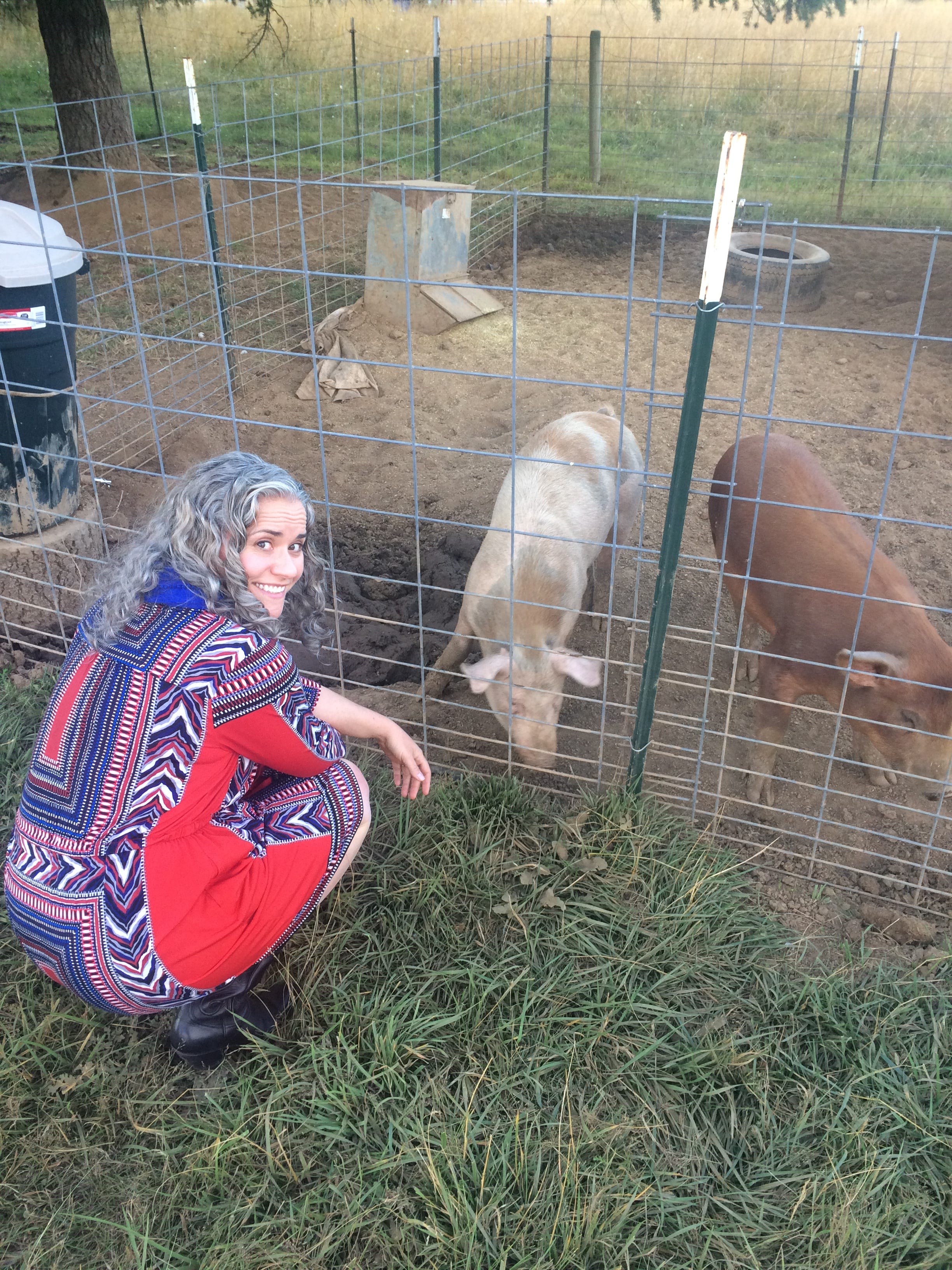
As a writer, I had no trouble convincing the in-town book store to stock my mystery series and poetry chapbook. I found a group of serious writers who met regularly to critique drafts and encouraged each other rather than falling into jealousy or internecine battles, as I’ve experienced elsewhere.
In Temperance, people looked out for their own. When our Bonfire Broads host fell seriously ill, the call went out for a barn-raising style intervention. A whole mess of us showed up to prune her trees, erect a little greenhouse, clean out the chicken coop, and generally lend a helping hand. That would never have happened back in the city.
It was a great place to live, in most aspects, as it turned out.
So you’re probably wondering why we ever left.
Anthony’s job opportunity turned out to be a case of bait-and-switch, and we would soon end up stranded in Temperance without viable incomes. My tech gig had also come to an end, and we couldn’t live on my book royalties and freelance pay.
As fate would have it, a chance came up for me to take a tenure-track position teaching game design at Webster University, back in St. Louis, Missouri, the city around which my birth family still lived.
After 17 years away from them, I’d longed for reconnection.
The deeper answer to the question of why we left Temperance, though, the one I finally came to see once and for all, is that I still had much work to do to reconcile the legacy of horrific trauma from my past—from my childhood and early adulthood—and all of that was connected both to those family members and to that place, the world in and around St. Louis.
When Zander went away to college in 2017, Anthony and I moved to the Lou, as it’s called. What transpired after that, over the past now eight years, is a whole story of its own, especially as it reveals how long it takes—a lifetime, in fact—to undo the formidable damage of early childhood trauma.
And remember I told you last time that leaving Seattle allowed us to get Zander out of there just when he needed it, twice? The other time was for the year before he entered the Navy, when he came to live with us full-time again, at our old farmhouse in the Lou. It was punctuated by the collective pandemic madness, but even so, that was one of the happiest years of my life.
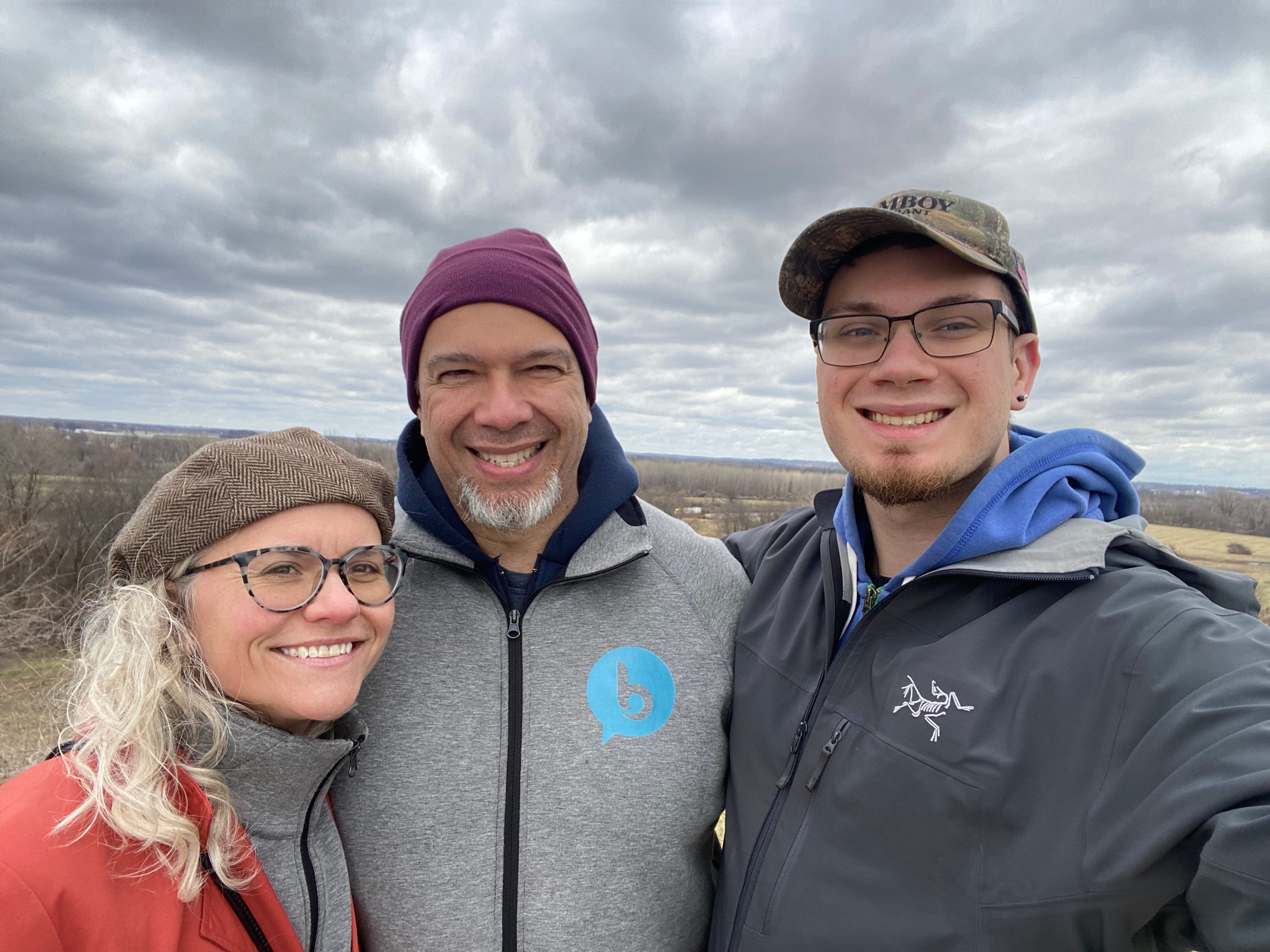
Nearly the whole eight years Anthony and I lived in the Lou, we worked out a plan to return to small-town living. Even before COVID, we began our research, visiting places we thought we might like to live.
I kept a spreadsheet ranking towns according to their safety scores, populations, whether or not they had access to farm-fresh food, and other criteria.
Working with four different realtors in five different counties, we toured homes in earnest from the onset of the pandemic until we finally settled on a new residence in May of last year.
We faced stiff competition in our lower-than-median price range. After being outbid three times, it finally took waiving inspections and a generous escalation clause to snag the right one.
Selling our World’s Fair-era beauty was easier, with multiple offers within the first week of listing. Our hard work was worth it!
Life is full of tradeoffs, of course. We downsized from a three-bedroom home to two and lost a dining room. Our new home boasts no period details like the transom windows, pocket doors, and copper knobs in the old house: It’s a 90s ranch home.
But what it doesn’t deliver in terms of architectural charm it makes up for in comfort and coziness, especially for a couple whose needs and desires have changed and continue to change with age.
We couldn’t be happier with our new small-town, rural community. I’m surprised to say it’s even surpassed our expectations. On that point I’ll have more to share in the future, but I’ll end this post with perhaps the best part of all…
We have more gardening space in the new place.
We went up from .19 to .33 acre!
I don’t know about you, but we didn’t even see that one coming. It happened by accident…
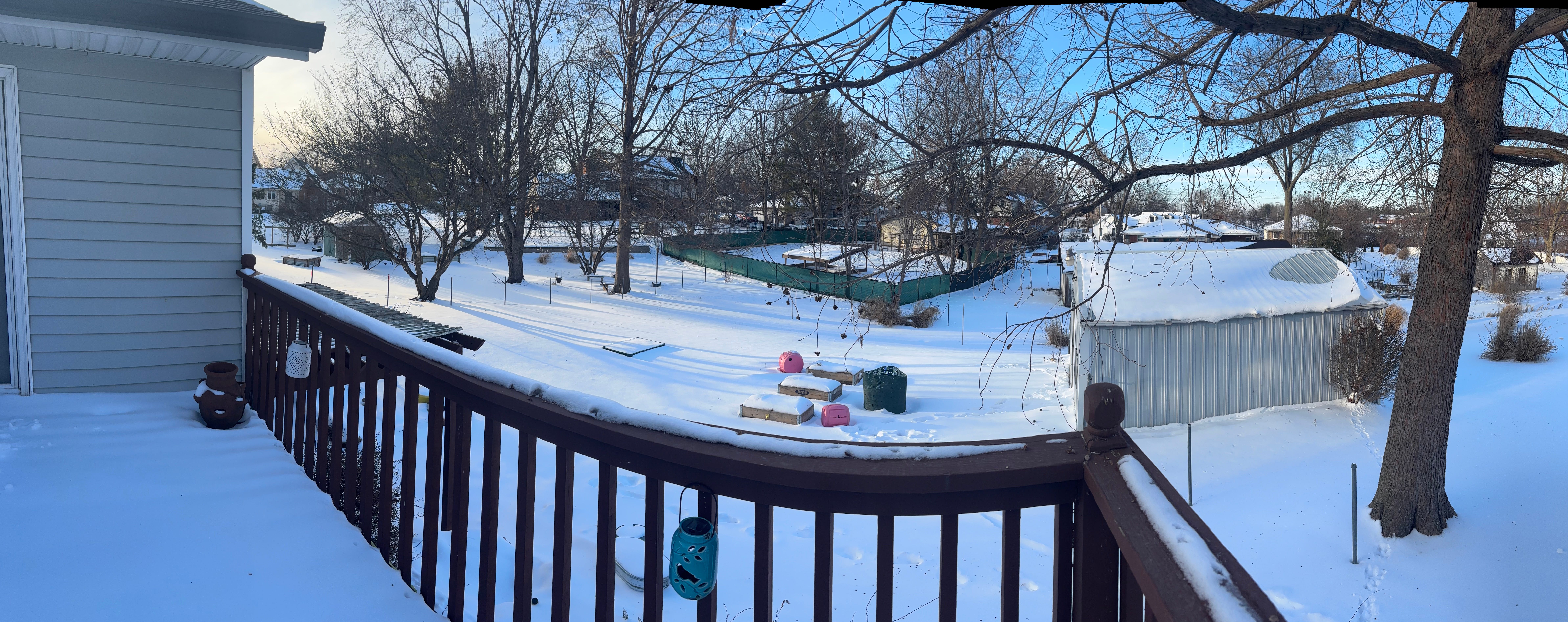
Up to the green fence in the background and including the pole barn (!) on the right, aaaaall of that is ours, even past those fence posts cutting across the yard on the left. That’s where we thought the property ended when we bought it, but it turns out the tree grove behind the fence was also ours.
It seems fitting to end this story about a transition from city life to country life with this observation:
When we bought that old city Victorian in 2017, the first thing we did was put up a fence. But here in what we hope will now be our forever home, the first thing we did was take one down.
If you like this post, you might also enjoy my award-winning mystery series set in Seattle, about a family of detectives who solve crime using their ability to slip into other people’s dreams…


A third of an acre sounds like about the right amount of land. I look forward to seeing your land bloom as you work with it!
There's nothing like country living. City life is ok if you can afford to live in a fortress.